

Union Budget 2026 – Startup & MSME Funding Schemes – Key Highlights
The Finance Bill 2026 strengthens India’s commitment to Startups and MSMEs, focusing on easier access to finance, credit guarantees, innovation funding, digital transformation, export support, and ease of doing business.
With MSMEs contributing over 30% to GDP and 110+ million jobs, the new measures aim to reduce funding gaps and accelerate business growth.
Below are the key Startup & MSME funding schemes and financial incentives announced in 2026.
1. Expanded Credit Guarantee Scheme for MSMEs

The existing Credit Guarantee Fund Trust for Micro and Small Enterprises (CGTMSE) framework has been expanded — particularly to cover invoice financing on TReDS and improve credit flows.
Key Figures:
- Collateral-free guarantee cover expanded — ongoing measures to broaden reach, including TReDS-related support.
- Mandatory use of TReDS (Trade Receivables Discounting System) for CPSE procurement — expands MSME invoice financing, adding over ₹7 lakh crore previously financed via TReDS.
Impact:
- Easier access to short-term working capital
- Lower credit risk leads to increased lending
2. ₹10,000 Crore+ Fund of Funds for Startups (FFS) – Extended

The Government has committed a fresh ₹10,000 crore to the Fund of Funds for Startups (FFS), in addition to the existing government contribution.
Key Figures:
- ₹10,000 crore fresh allocation for startup investment
- Supporting SIDBI-managed SEBI-registered AIFs that invest in early-stage and growth-stage startups
Impact
- More capital in venture ecosystem
- Improved private VC participation
3. Startup India Seed Fund Scheme – Enhanced Allocation

To support idea-stage startups:
- Increased corpus for seed funding
- Grants for prototype development & market validation
- Special incentives for Tier-2 & Tier-3 city startups
Impact:
- Non-dilutive funding for early founders
- Encourages regional startup ecosystems
4. MSME Interest Subvention & Cheaper Loans
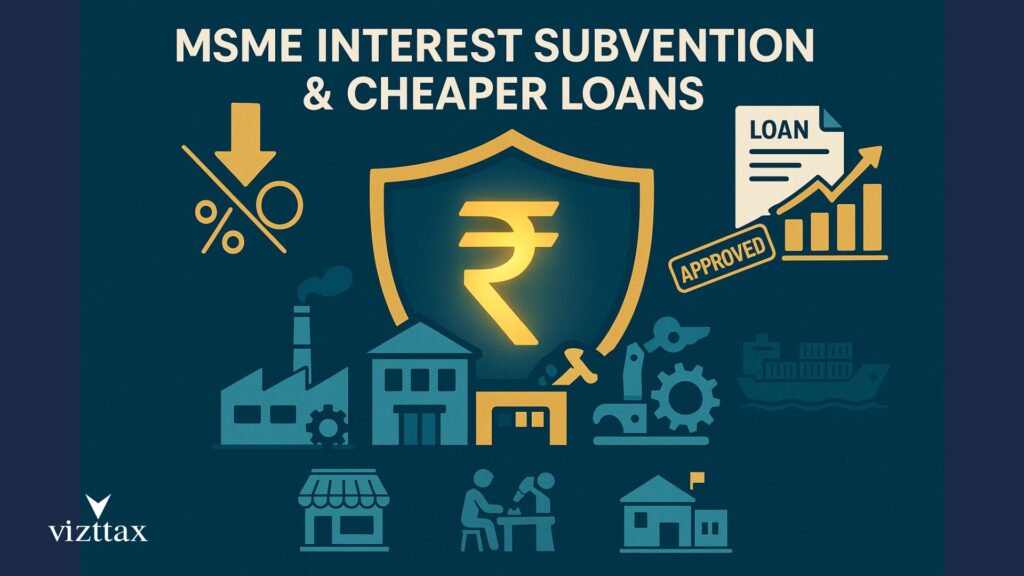
To reduce borrowing costs:
- Interest subvention on MSME loans extended
- Lower interest rates on Mudra Loans (Shishu, Kishore, Tarun)
- Additional interest relief for export-oriented MSMEs
Impact:
- Reduced cost of capital
- Better cash flow & business sustainability
5. Emergency Credit Line Guarantee Scheme (ECLGS) – Selective Continuation
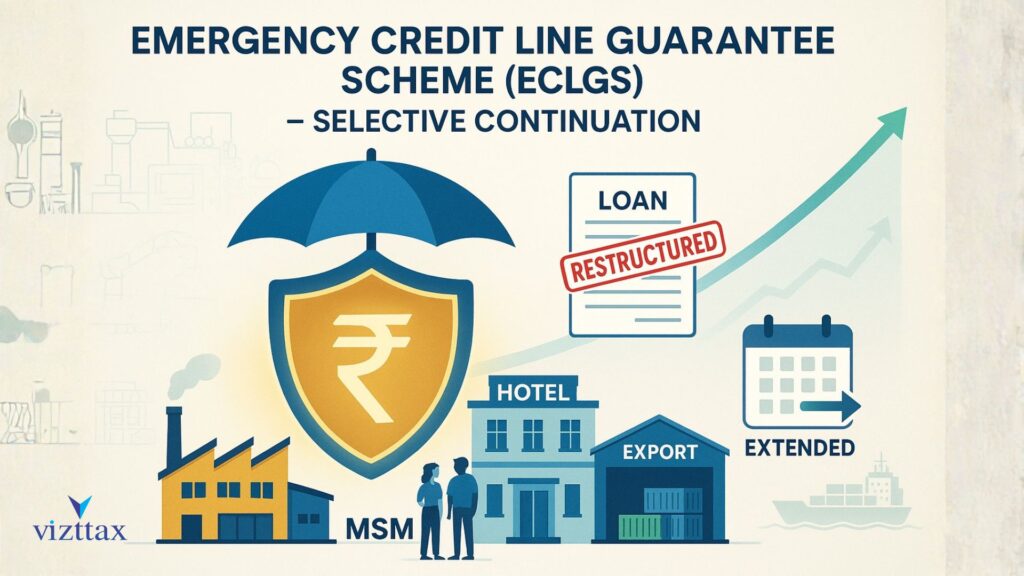
- Continued support for stress-affected MSMEs
- Special loan restructuring & repayment extensions
- Focus on manufacturing, hospitality, and export sectors
Impact:
- Prevents MSME closures
- Improves financial stability
6. Digital MSME & FinTech Lending Push

Government promotes digital lending & fintech-enabled credit:
- Use of GST, bank, and UPI data for faster MSME loan approvals
- Open Credit Enablement Network (OCEN) expansion
- Integration of Account Aggregator framework
Impact:
- Faster & paperless MSME financing
- Better credit access for small businesses
7. Special Manufacturing & PLI Support for MSMEs

Although production-linked incentive (PLI) outlays are sector-wide (semiconductors, electronics, pharma), MSMEs can benefit as vendors and suppliers in these ecosystems. Examples include:
- ₹40,000 crore electronics/semiconductor support (Mission 2.0)
- ₹10,000 crore for biopharma SHAKTI over 5 years
Impact:
- Scale manufacturing MSMEs into value chains
- Encourage tech adoption
8. Export Credit & Global Market Support
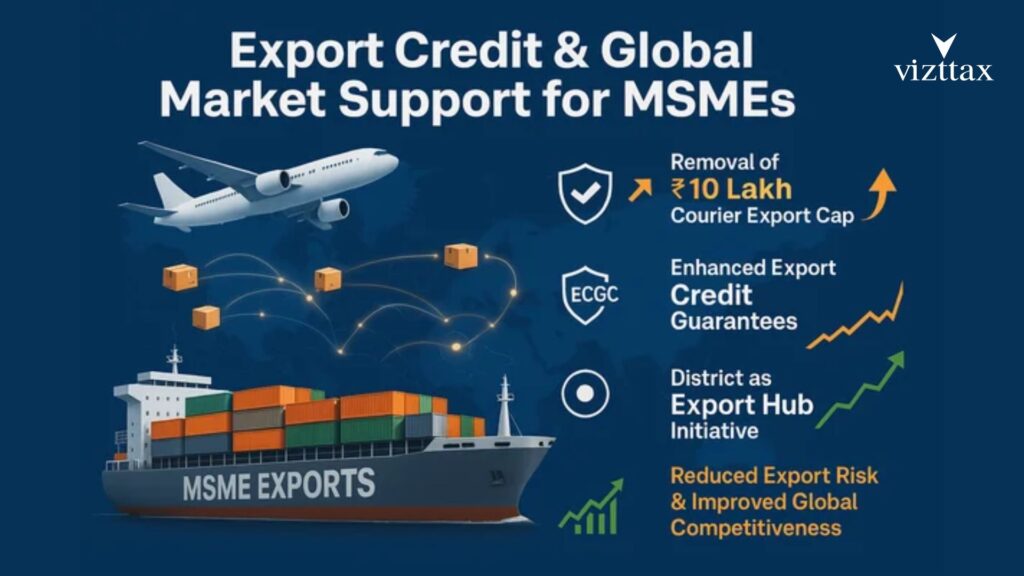
Export-oriented MSMEs receive additional financial support through the Export Credit Guarantee Corporation of India (ECGC).
Key Measures:
- Removal of courier export value cap of ₹10 lakh per consignment, facilitating e-commerce exports globally.
- Enhanced export credit guarantees and financial support through ECGC schemes.
- Support under District as Export Hub initiative
Impact:
- Reduced export risk
- Improved global competitiveness
9. Enhanced Funding for Women and SC/ST Entrepreneurs

Special incentives have been introduced under the Stand-Up India Scheme.
Term loans of up to ₹2 crore over 5 years are confirmed for first-time women, SC, and ST entrepreneurs under targeted schemes — aiming to widen access to capital without collateral constraints.
Impact:
- Inclusive participation in formal business sector
10. Green MSME & Sustainable Business Funding

The Union Budget 2026 introduces broader sustainability emphasis:
Key Support Areas:
- Low-interest loans for solar, EV adoption, and energy efficiency
- Green startup grants & carbon-credit-linked incentives
- Funding for waste-to-wealth & circular economy projects
Impact:
- Encourages eco-friendly business models
- Supports energy-efficient adoption
11. Innovation & Technology Grants for Startups
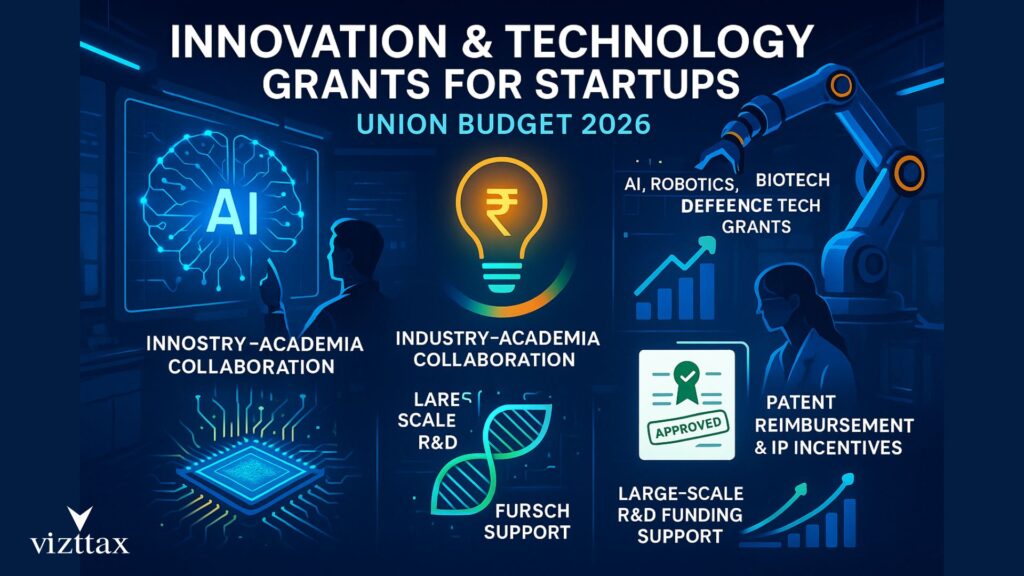
Government expands R&D funding:
- Grants for AI, robotics, biotech, defence tech
- Industry-academia innovation funding
- Patent cost reimbursement & IP grants
The overall focus is on technology and R&D through wider programmes (e.g., semiconductor mission, biotech incentives) totaling tens of thousands of crores.
Impact:
- Encouragement for intellectual property creation
- Strengthening India’s deep-tech ecosystem
12. Faster Payments & Working Capital Relief via TReDS
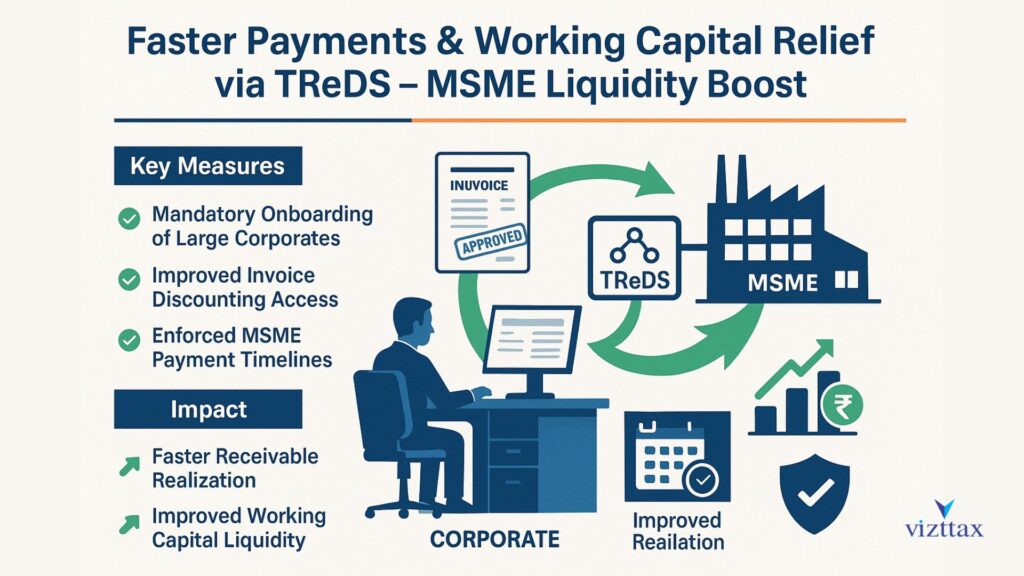
The Trade Receivables Discounting System (TReDS) expansion is one of the largest liquidity measures for MSMEs:
Key Measures
- Mandatory onboarding of large corporates
- Improved invoice discounting access
- Enforcement of MSME payment timelines
Impact:
- Faster realization of receivables
- Improved MSME liquidity
13. Startup Tax & Compliance Relief (Section 80-IAC)
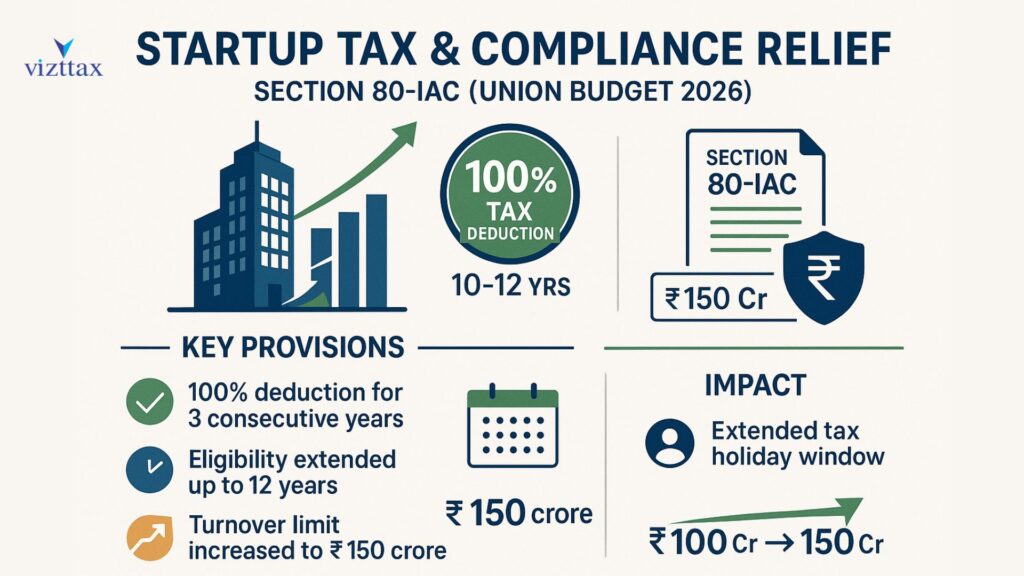
Specific tax incentives under Section 80-IAC have been widened:
- Eligible startups can claim 100% deduction for three consecutive years within their first ten years of incorporation.
- The eligibility criteria have been expanded to allow startups incorporated up to 12 years old and raised turnover limits from ₹100 crore to ₹150 crore.
Impact:
- Extended window for tax holiday
- Higher threshold encourages later-stage startups
Conclusion: Strategic Opportunities for Startups and MSMEs
The Finance Bill 2026 represents one of the most comprehensive financial support frameworks introduced for startups and MSMEs in recent years.
Entrepreneurs should take proactive steps to:
- Register under Udyam and Startup India
- Explore collateral-free loan schemes
- Utilize government grant and seed funding programs
- Adopt digital lending platforms
- Use TReDS for efficient working capital management
These measures will significantly enhance access to finance and improve long-term business sustainability.