

Running a business without a CFO is like driving a car with no dashboard — you might be moving fast, but you don’t know your speed, fuel, or warning signals.
In the early days, founders manage everything — sales, operations, and yes, finance too. But as the business grows, financial complexity grows even faster: more invoices, more taxes, more vendors, and more compliance.
That’s where the cracks begin to show.
A Virtual CFO doesn’t just manage accounts — they bring financial intelligence, strategic control, and decision-making discipline.
Let’s explore what founders miss out on when they try to run a business without one.
1. Missed Tax Planning and Compliance Opportunities
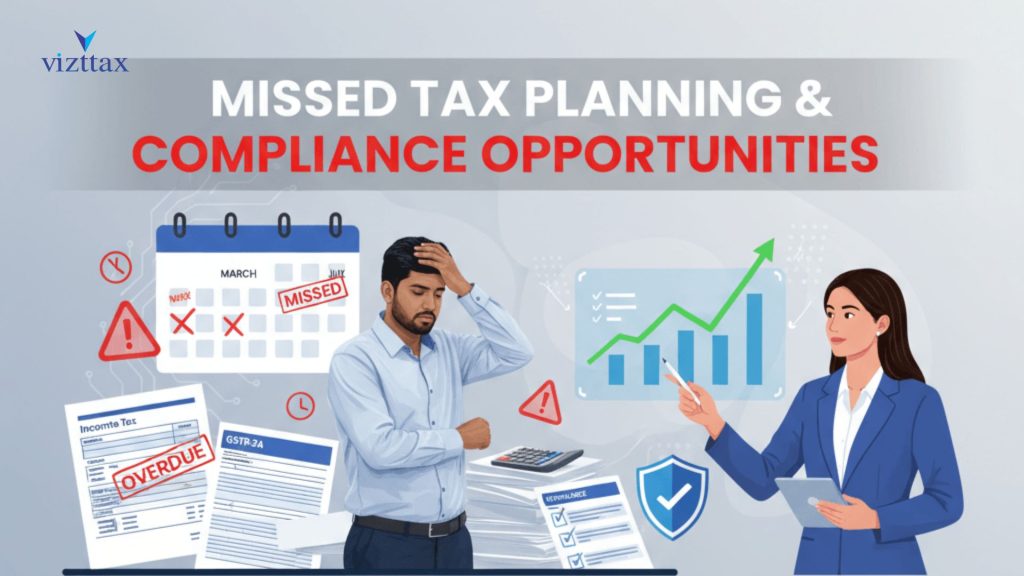
Most business owners treat tax filing as an annual activity — but tax planning is not the same as tax filing.
Without a CFO:
- Income Tax is planned at year-end, often leaving no time for legal savings.
- GST mismatches (between books and GSTR-3B/2A) go unnoticed.
- Cash expenses above ₹10,000 get disallowed — silently increasing tax liability.
- Advance tax calculations are reactive, not forecast-based.
A Virtual CFO ensures continuous tax strategy — optimizing your structure, planning investments, and aligning deductions throughout the year.
Result: You pay only the tax you owe — not a rupee more.
2. Missed Profitability Insights and Margin Analysis

Every founder wants higher profits — but very few know which clients or products actually make money.
Without a CFO:
- Margins are never tracked at product or project level.
- Overheads keep rising without proportionate revenue.
- Founders rely on the bank balance to judge performance.
A Virtual CFO builds a profitability dashboard — showing real-time contribution per client, cost center, or business unit.
Result: You can double down on profitable segments and fix or exit the loss-making ones.
3. Missed Cash Flow Visibility and Early Warning Signals
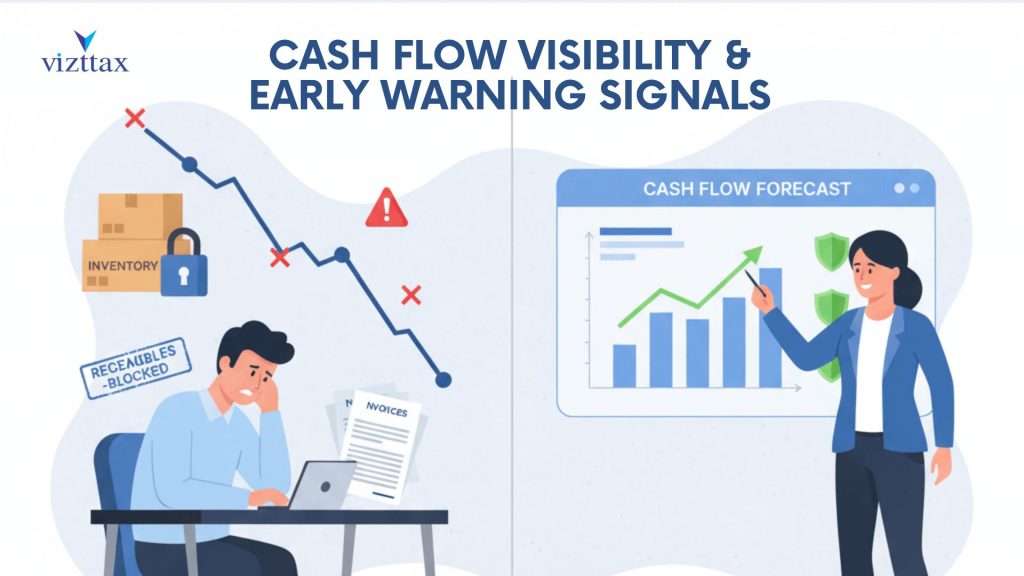
“Business is good, but there’s no cash.” — every founder says this at some point.
This happens because cash flow and profit are not the same thing.
Even if you’re profitable on paper, cash may be stuck in receivables or excess inventory.
Without a CFO:
- There’s no 3-month rolling cash flow forecast.
- Vendor payments are unplanned, leading to interest or penalties.
- Customer follow-ups for collections are reactive, not systematic.
A Virtual CFO brings cash flow discipline — setting collection targets, forecasting shortages in advance, and planning payments strategically.
Result: You never get surprised by your own bank balance again.
4. Missed Financial Control and Accuracy
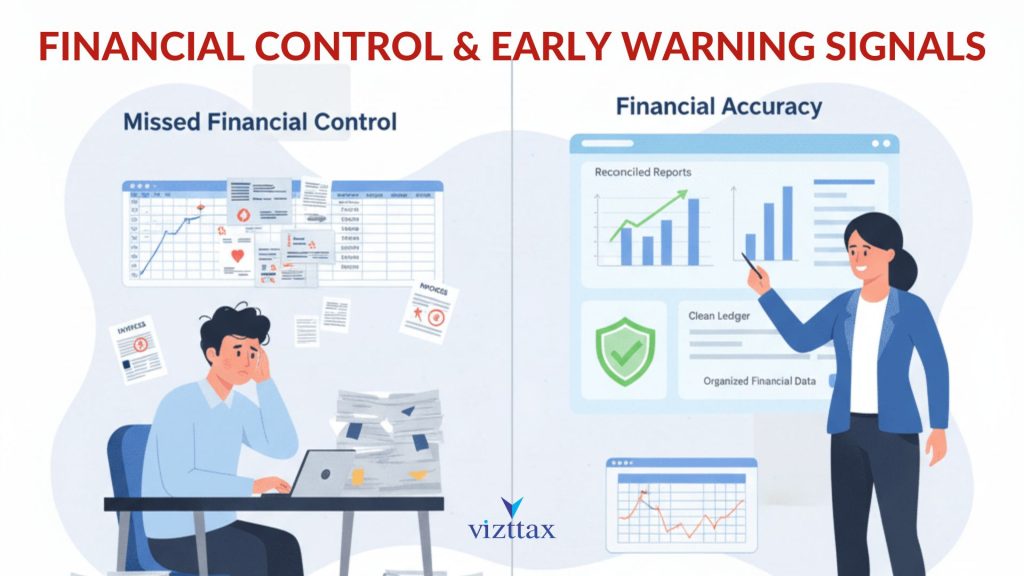
In growing companies, finance often becomes data chaos — multiple accountants, partial reconciliations, and files scattered across emails.
Without a CFO:
- Books are updated irregularly.
- Vendor/customer reconciliations happen only at year-end.
- GST and TDS returns are filed, but no one checks accuracy.
- Year-end adjustments are left for auditors, not reviewed monthly.
A Virtual CFO builds financial control systems — maker-checker processes, automated reconciliations, and timely review of every account head.
Result: Your books stay audit-ready all year round — not just in March.
Simply exporting reports from accounting software (like Tally or Zoho Books) doesn’t help unless analyzed and summarized meaningfully.
5. Missed Funding and Growth Readiness
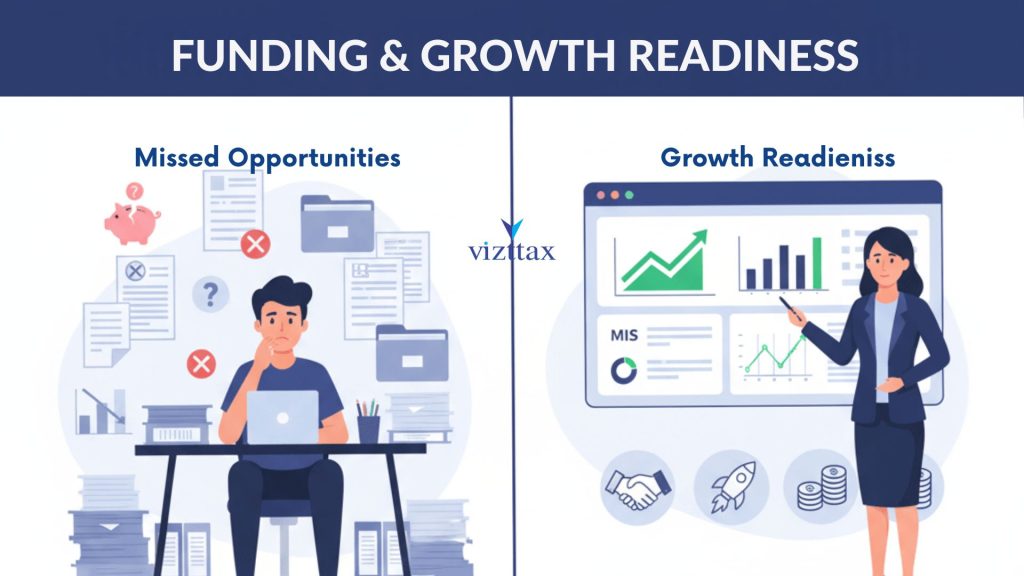
When a business suddenly gets a funding or loan opportunity, founders scramble to prepare MIS, projections, and due diligence documents.
Without a CFO:
- MIS is outdated or inconsistent with filings.
- Financial statements lack clarity and investor-friendly presentation.
- No forecast or budget model exists to show growth potential.
A Virtual CFO ensures you’re investor-ready year-round — clean books, reliable MIS, accurate forecasting, and compliance transparency.
Result: You can approach investors or lenders confidently, anytime.
6. Missed Scalability and Systemization
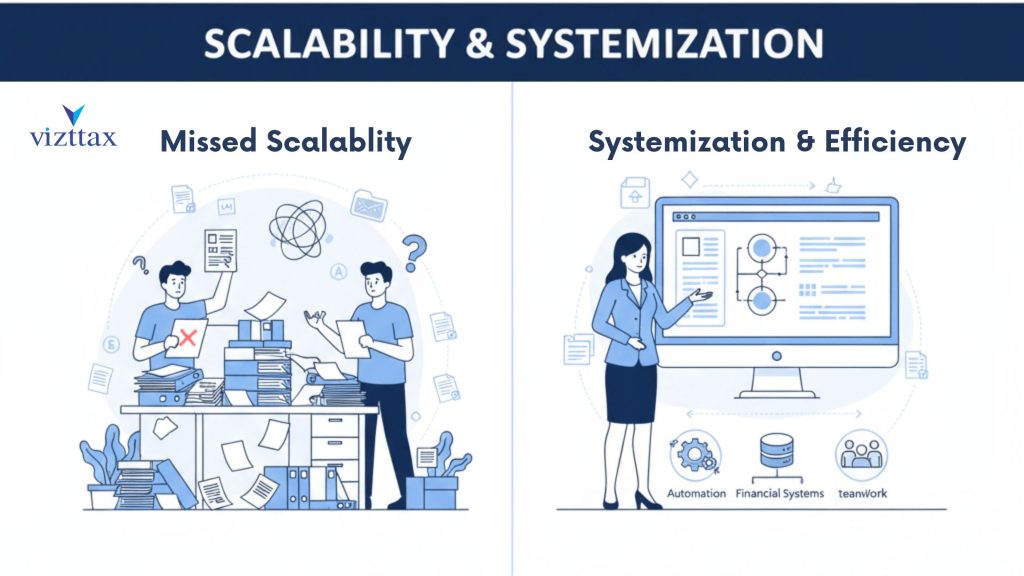
Every fast-growing company reaches a stage where founder-driven decisions no longer work. Without financial systems, scaling becomes messy.
Without a CFO:
- Expense approvals are ad-hoc.
- Roles and responsibilities in finance are unclear.
- There’s no automation or reporting workflow.
A Virtual CFO sets up finance systems that run without you — defining policies, implementing automation tools, and establishing a review mechanism.
Result: Your business becomes process-driven, not person-dependent.
Why Founders Delay — and Why It Costs Them More
Many founders think:
“I’ll hire a CFO later — once the company gets bigger.”
But that’s the biggest mistake.
Because without financial visibility, growth itself becomes unpredictable.
When your finance isn’t monitored, you lose:
- Control over cash
- Track of tax leakages
- Confidence with lenders and investors
- And peace of mind
A Virtual CFO is not a cost — it’s an investment in control, compliance, and clarity.
How Vizttax Helps
At Vizttax, we don’t just maintain your books — we act as your Finance Partner.
Our Virtual CFO Services are designed for founders who want discipline and visibility without building a large internal finance team.
We help you with:
- Monthly MIS and profitability review
- GST, TDS & Income Tax compliance monitoring
- Cash flow and working capital planning
- Financial process setup and automation
- Investor or loan readiness support
With Vizttax, you get the power of a full-time CFO — at a fraction of the cost — ensuring your business runs with control, confidence, and clarity.