
How to Register a Private Limited Company in India – Complete Guide
A Private Limited Company is the most popular business structure for startups, scalable businesses, and investor-funded companies in India.
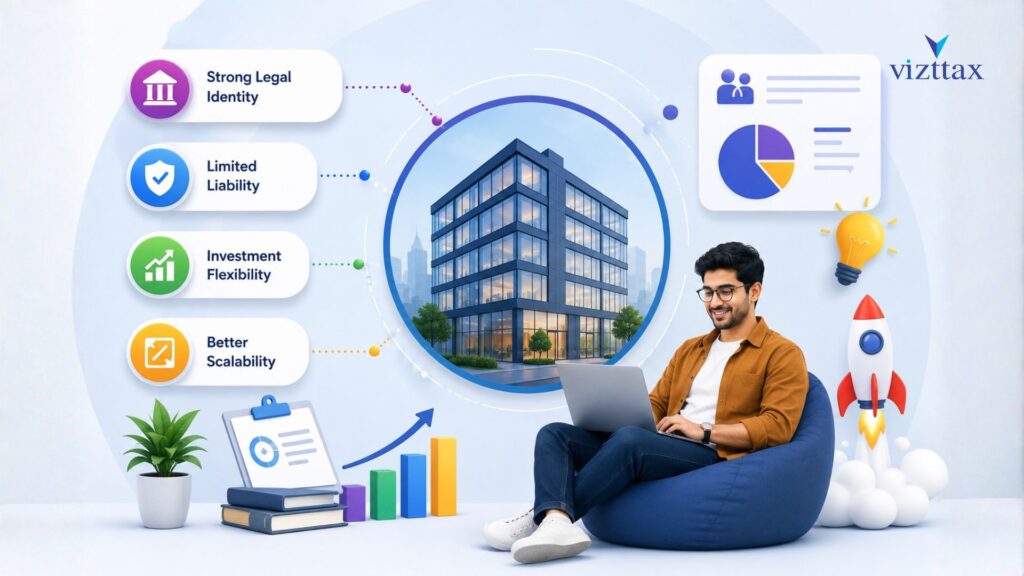
Most technology startups, SaaS businesses, and growth-oriented ventures prefer this structure because it offers:
- Strong legal identity
- Limited liability
- Investment flexibility
- Better scalability
Private companies are governed by the Companies Act, 2013.
What is a Private Limited Company?
A Private Limited Company is a separate legal entity distinct from its shareholders and directors.
It can:
- Own assets
- Enter contracts
- Raise investment
- Continue independently
Best Suitable For
Private limited companies are ideal for:
- Startups
- Tech companies
- SaaS businesses
- E-commerce companies
- Scalable ventures
- Investor-funded businesses
Advantages of Private Limited Company
1. Limited Liability
Shareholders’ liability is limited to share capital.
2. Separate Legal Identity
Company exists independently from owners.
3. Easy Fundraising
Investors prefer company structure.
4. Better Brand Image
Corporate clients and institutions prefer companies.
5. Perpetual Succession
Company continues despite ownership changes.
6. Ownership Transfer Flexibility
Shares can be transferred subject to restrictions.
Disadvantages of Private Limited Company
1. Higher Compliance
Mandatory ROC filings and statutory compliances apply.
2. Professional Maintenance Required
Accounting and compliance management is important.
3. Higher Cost
Setup and annual maintenance costs are higher.
4. Regulatory Requirements
Board meetings and documentation obligations exist.
Minimum Requirements
- Minimum 2 directors
- Minimum 2 shareholders
- One director resident in India
- Registered office
- DSC for directors
Documents Required
Director/Shareholder Documents
- PAN Card
- Aadhaar Card
- Photograph
- Email ID
- Mobile number
Address Proof
- Bank statement
- Utility bill
Office Proof
- Electricity bill
- Rent agreement
- NOC
Information Required
- Company name
- Business activity
- Shareholding pattern
- Capital structure
- Director details
- Office address
Step-by-Step Registration Process
Step 1: Obtain DSC
Digital signatures are required for filings.
Step 2: Reserve Company Name
Name application filed with MCA.
Step 3: Prepare Incorporation Documents
Includes:
- MOA
- AOA
- Director declarations
Step 4: File SPICe+ Forms
Forms filed online with MCA.
Step 5: Obtain Certificate of Incorporation
MCA issues:
- CIN
- PAN
- TAN
Compliance Requirements
Common compliances:
- ROC filings
- Board meetings
- Income tax return
- GST return
- Statutory audit
- Annual filings
Frequently Asked Questions (FAQs)
1. Can one person start private limited company?
Minimum two shareholders/directors generally required.
2. Is audit mandatory?
Yes
3. Can startup raise investment easily?
Yes, investors usually prefer this structure.
4. Can foreign investment be received?
Yes, subject to FEMA and sector rules.
5. Is private limited company suitable for small business?
Depends on growth plans and compliance capability.
Final Thoughts

Private Limited Company is best for:
- Startups
- Scalable businesses
- Investor-focused ventures
- High-growth companies
Although compliance is higher, the structure offers:
- Credibility
- Funding flexibility
- Long-term scalability